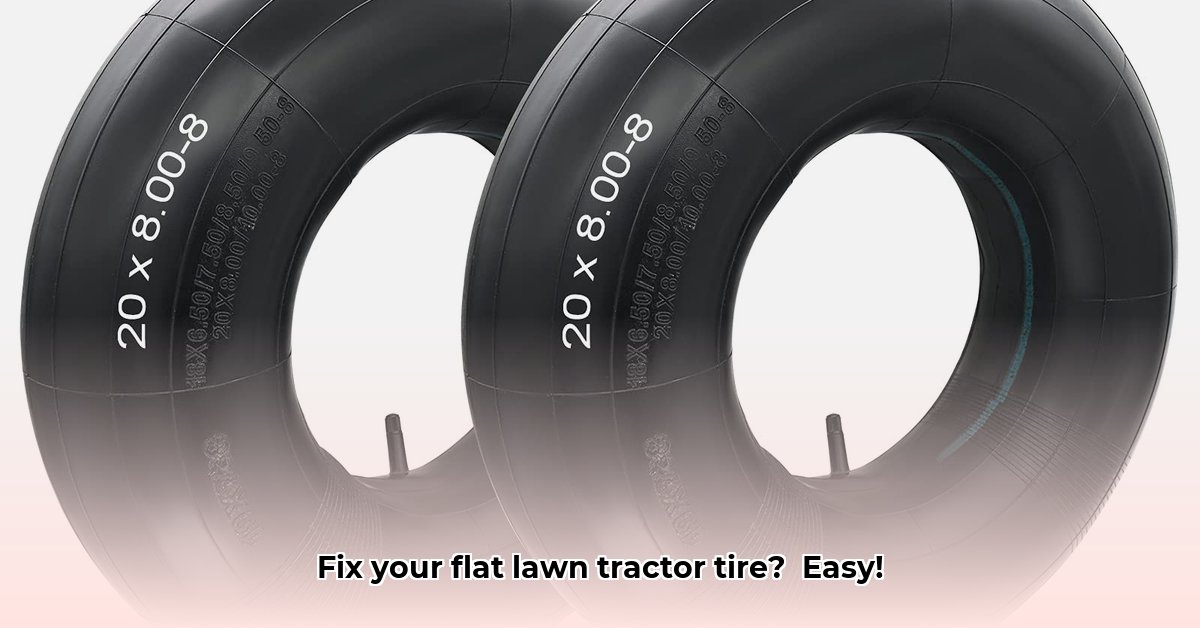
Maintaining your lawn tractor's tires is crucial for efficient operation and a smooth mowing experience. A flat tire can quickly derail your weekend plans. This guide provides a step-by-step approach to diagnosing tire issues, gathering necessary supplies, and replacing a damaged inner tube. For heavy-duty options, check out these heavy-duty inner tubes. By following these instructions, you'll be back to mowing in no time.
Identifying the Problem: Flat Tire vs. Slow Leak
First, assess the tire's condition. Is it completely flat, or is it gradually losing air? A completely deflated tire likely indicates a puncture or major leak. A slow leak might take days or weeks to become noticeable. Carefully inspect the tire tread for embedded objects such as nails, thorns, or small debris—common culprits behind punctures. If no obvious punctures are found, a more thorough inspection of the inner tube may be necessary.
Tools & Materials Checklist
Before you begin, gather the following:
- Tire irons: (Metal levers used to pry the tire off the rim) – Available at most hardware stores or online retailers like Amazon. [Link to Amazon tire iron selection]
- New inner tube: (Ensure it's the correct size for your tires; check your tractor's manual) – [Link to a reputable online retailer for inner tubes]
- Air compressor or bicycle pump: (An air compressor is faster, but a pump suffices) – [Link to an example of a suitable air compressor or pump.]
- Bucket of soapy water: (To detect leaks)
- Gloves: (To protect your hands)
- Optional: Valve core remover tool and replacement valve cores (For easier valve core replacement or repair.) - [Link to suitable valve core tools and replacement cores.]
Step-by-Step Inner Tube Replacement
Follow these steps carefully to replace your lawn tractor's inner tube:
Completely Deflate the Tire: Release all air from the tire. If using a valve core remover tool, remove the valve core for easier deflation. Otherwise, depress the valve stem to release the air.
Remove the Wheel: Consult your lawn tractor's owner's manual for specific instructions on wheel removal. Typically, this involves loosening lug nuts and removing the wheel assembly.
Remove the Tire from the Rim: Use tire irons to carefully pry the tire bead (the edge of the tire) from the rim. Work your way around the wheel slowly and evenly, applying gentle pressure to avoid scratching the rim.
Inspect the Old Inner Tube: Examine the old inner tube for punctures or leaks to understand the cause of the flat tire. This can help prevent future issues.
Install the New Inner Tube: Carefully place the new inner tube inside the tire, ensuring it is not twisted or folded. Smooth out any wrinkles or creases.
Reinstall the Tire: Work the tire bead back onto the rim, applying even pressure. Ensure the tire is completely seated on the rim.
Inflate the Tire: Inflate the tire to the pressure specified in your tractor's owner's manual. Avoid overinflation, which can damage the tire.
Conduct a Leak Test: Apply soapy water to the entire tire and look for bubbles, which indicate leaks.
Reinstall the Wheel: Mount the wheel back onto the tractor and tighten the lug nuts securely.
Troubleshooting Common Issues
Stuck Tire: If the tire is difficult to remove, use additional tire irons and apply even pressure. Lubricating the tire bead with soapy water can help.
Locating Leaks: If you can't find a leak visually, submerge sections of the inner tube in water to detect escaping air bubbles.
Valve Stem Problems: If the leak originates from the valve stem, replacing the valve core may resolve the issue.
Preventing Future Flat Tires
Regular maintenance significantly reduces flat tire occurrences.
Regular Pressure Checks: Check tire pressure frequently to ensure proper inflation. Underinflation greatly increases the risk of punctures and damage.
Careful Operation: Avoid driving over sharp objects. This simple precaution significantly reduces the chance of punctures.
Proper Storage: When not in use, store your tractor in a dry location, protecting the tires from the elements and deterioration.
Conclusion
Regular tire maintenance is essential for a well-functioning lawn tractor. By following these steps and practicing preventive measures, you can ensure a smoother mowing experience and extend the life of your equipment. Remember—a little proactive maintenance goes a long way!